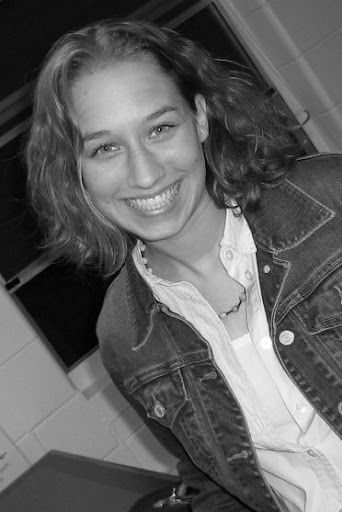
So this weekend I attended the NCPTW - the National Conference on Peer Tutoring in Writing, at the University of Michigan-Ann Arbor.
I was fairly wary, as a whole weekend of talking about editing and peer tutoring isn't normally my idea of a "fantastic time." And to be sure, there were certainly a fair sure of dull moments.
But it was also interesting for two reasons: first, because I saw how quickly fundamental differences in attitudes/beliefs come up even in the setting of writing consulting and secondly, how even writing centers can be scenes for cultural exchange, growth, and important learning.
To the first point, it was interesting to find that many of the writing centers represented (and this was a national conference with writing center directors and peer tutors from California, Florida, Maine and everywhere in between, plus random people from Canada, Ireland, and Puerto Rico) were huge proponents of a style of editing where you never write on the person's paper.
Now, I should preface this by saying that the theme of the conference was AUTHORITY in the Writing Center. Thus, the idea is that to keep the authority with the writer and help them grow in their writing, that you help them think about the problems and let the writer (and the writer only) mark errors and make changes.
Now, to me and my fellow writing consultants representing VU this was ludicrous. I mark up papers like nobody's business. I have enough trouble with minimalist editing much less no editing. Or a style of editing where you take 2 hours to go through 4 pages with a person talking about each and every semi-colon, paragraph structure, and content...
But it was interesting because at the keynote luncheon (where the keynote speaker actually talked about the role of writing centers amidst globalization and changing workplaces...I know. crazy) students stood up on both sides attempting to defend one way of editing or the other. Trying to convince the other side. I swear we could have been debating the War on Iraq, poeple were so convinced of one side or the other, unwilling to budge, or see that it was mostly a matter of the way we've been trained, the way our individual writing centers work, and just a fundamental difference in philosophy.
It was just very intersesting, becuase that was certainly the last thing I thought would come up.
Second to last on my mind going into this was the importance of writing centers, editing, and learning language/academic writing in terms of cultural exchange...but again, I was confonted with it numerous times during the day.
We get many international students at the writing center. Which is great. I actually helped one Saudi Arabian student a few weeks ago and actually got to make a sweet comparison about English and Arabic grammar to help him understand. I certainly didn't go into this job for that aspect, but it has turned out to be a perk of getting to learn about other people's cultures and seeing up close the differences in languages and writing.
So, in one of the sessions yesterday, one peer tutor presented the problems she ran into in terms of helping international students understand prompts, write essays/speechs, help wtih grammar and yet not hinder or silence their natural cultural voices within the paper. In the course of the session, the question was raised about whether learning/teaching the "academic writing" dialect [the idea that the form and rules of academic/professional writing are a specific dialect that as students/future professionals we have to learn to be successful] is actually culturally inhospitable because we don't encourage other ways of thinking about issues, presenting ideas, or the use of words that we consider colloquial, pedestrian, slang, foreign, etc.
Now, I disagree that teaching students how to use "academic writing" is culturally inhospitable. I think we as students learn the form of academic writing as a tool to be able to convey our ideas in a professional manner. This way our ideas are supported and can be communicated to many more people. The process is useful, and I think every language has a dialect, so to speak, or professional or formal language that you use in this way.
But we as peer tutors do have to be careful that when teaching this form we don't silence cultural voices or ignore different ways of thinking about ideas than what might seem "correct" in western culture.
It was just really interesting to think about the best ways to help students for whom English is a second language. And how sometimes it is at this point when cultural exchange gets really tricky. How do we decide what formal language is...why is it that ebonics is considered incorrect? why do we assume so much when we hear broken English spoken? are our ideas of language at fault...should we reevaluate what our ideas about what "true English" or "academic/professional" English is? do we need to learn to listen better to understand people who speak English as a second language? or shoud those people be forced to learn English better or not live here?
Not questions that I thought that would be raised at a conference on peer tutoring...
Another thought that occured to me this weekend, which is somewhat unrelated, and probably more of a continual wondering, is yet again the idea of vocation. I went to that conference and I thought... "wow, these are people who really care about what they do. they work hard to help students learn, they get together each year to get ideas on how to be better, they adapt, and they celebrate and encourage learning day in and day out."
Our Writing Center director does some really great work. And it is important. It's important to have teachers and peer tutors and friends who will encourage us to critically think, learn to argue, write and convey our thoughts in a thoughtful, understandable way...and I am all for making those resources as strong and as available as possible on campus. It's work i'm capable of. Spending my days teaching, learning, working with students, seeking to make resources available to as many as need it. A job that is continually challenged to be better, to be more connected and accessible...
Similiarly, working with international students through an international studies office or leading trips overseas to let people grow in their ideas of the world...work that is challenging, complicated, and sometimes the most personal, nittygritty ways of cultural exchange ever. Work that truly changes the world...in a small way to be sure, but also in really big lifechanging ways for the all the peopel who pass through your hands.
And yet my mind looks elsewhere. Like for some reason those jobs aren't quite enough...not even that, that that's not exactly what I'm supposed to do...that thought I struggle with because I feel like that's arrogant because there are so many people out there doing such good work. doing work that i feel truly matters. work that I would love to support if i had more energy, more time, more...
Yet, i'm pulled to something else. And i'm okay with not knowing what this is. I'm okay with not even pursuing it. And yet still I struggle, and I don't quite know why. I guess partly because I feel like it's arrogant to feel like I'm called to something more. Partly because I could very well fail or never find it...and there are a lot of days when I simply would rather turn around and pursue something else. Something just a little easier. Something I know I'm capable of.
Spend the rest of my days going to an annual writing center conference. Working to find new ways to help people learn. That's not a sad existence.
And yet somewhere inside me, a little voices says...nope. try again. The Catch-22 of Vocation.
Sunday, November 12, 2006

Friday, November 10, 2006
Dems take the house!
So, it is now official. The Democrats took the House and the Senate! And Donald Rumsfeld is out!
Could there really have been a better week in US politics?
More seriously, the elections were pretty exciting! Obvious gains for the Democrats and at least for right now there is still a hope that the Democrats will step up and bring a new sense of bipartisanship and some work ethic!
Comprehensive Immigration Reform? Healthcare? Possible foreign policy shifts...okay maybe that's too much to ask for, but at least the first two - PLEASE GOD!
Also, exciting are the firsts...Keith Ellison won in Minnesota and will be the first Muslim to serve in the House of Representatives. It is likely that Nancy Pelosi will be the first women to serve as the Speaker of the House (3rd in line for the President!) and even if Republicans are labeling her a crazy San Francisco liberal (the left of the left of the left) it might be good to have someone to rally the Democrats, push an agenda, and stand up and make some things happen. Now, if she uses her position to just shout out partisan remarks and refuse to let anything get done for the next two years...not cool. But there are possibilities.
So, we shall see. A new political era has been entered...hopefully to stay for awhile.
Could there really have been a better week in US politics?
More seriously, the elections were pretty exciting! Obvious gains for the Democrats and at least for right now there is still a hope that the Democrats will step up and bring a new sense of bipartisanship and some work ethic!
Comprehensive Immigration Reform? Healthcare? Possible foreign policy shifts...okay maybe that's too much to ask for, but at least the first two - PLEASE GOD!
Also, exciting are the firsts...Keith Ellison won in Minnesota and will be the first Muslim to serve in the House of Representatives. It is likely that Nancy Pelosi will be the first women to serve as the Speaker of the House (3rd in line for the President!) and even if Republicans are labeling her a crazy San Francisco liberal (the left of the left of the left) it might be good to have someone to rally the Democrats, push an agenda, and stand up and make some things happen. Now, if she uses her position to just shout out partisan remarks and refuse to let anything get done for the next two years...not cool. But there are possibilities.
So, we shall see. A new political era has been entered...hopefully to stay for awhile.
Thursday, November 09, 2006
Academia
So, I’ve been meaning to do this for awhile, but you know once that initial impulse to reflect on academics, politics, and life passes or gets overrun by time…it goes on the list. And lists involve prioritizing, and blogging is simply not a priority.
But tonight I need to get a fantabulous amount of writing done, so I figure why not start it off right by getting my fingers working by posting.
It’s been a long, rough fall for many and various reasons. But one thing I haven’t really got a chance to do is reflect on the academics of it all.
Classes…the bane of my existence and yet the inspiration and impetus for so much learning.
This semester has been an interesting mix…International Relations and International Economics (for my major), Ideas and Power in Latin American History (minor), Psychology (Gen Ed), CC Seminar with Prof. Schwehn called Making Things Right and finally an independent study in Arabic.
I always find it interesting (sometimes frustrating, sometimes mildly amusing) how classes end up connecting, overlapping, and supporting each other in various themes and areas. Obviously some of the above have obvious overlappage. For example, unsurprisingly international relations and international economics have both posed questions about globalization, liberal economic theories such as free trade, put emphasis on world politics, and posed questions about hotly debated topics like outsourcing.
But other connections have been made as well; general psych is certainly not my favorite class (and I’ve actually made skipping class an artform at 9:00 on MWF and have managed to only miss one of the random quizzes thus far which actually tabulates our attendance grade) HOWEVER, there’s no doubt that political scientists built international relations theory based on human psychology, and blatantly stole many terms from the dear psychologists. Although I’m thankful that they don’t descend into Freud too often…just a little bit of nature vs. nurture, none of this Freudian attempts to blame everything on our parents’ pottytraining techniques…
So, Psych, yes. Fairly unexciting, but since I’m taking it pass/fail I’ve been able to digest the information, get decent grades on the tests and not stress. Lovely. We’ve studied sleep, memory, personality traits, behavior, historical psychological techniques and trends in how people have viewed human psychology. The lab is fairly tolerable as well.
A few quotes that I find amusing from the margins of my psych book:
“I love to sleep. Do you? Isn’t it great? It really is the best of both worlds. You get to be alive and unconscious.” Rita Rudner
“When a man can’t explain a woman’s actions, the first thing he thinks about is the condition of her uterus.” Clare Boothe Luce
“It wasn’t what I expected. But facts are facts, and if one is proved to be wrong, one must just be humble about it and start again.” Agatha Christie’s Miss Marple.
International Relations is not difficult and certainly not terrible thought-provoking in terms of class discussion or academic challenge…but it is what I’m most interested in. So, the class does frame a lot of international relations theory for me and help give context for the things I’ve been reading for the past 9 months. I love Prof. Blackmon even if she does ask easy questions and I’ve certainly enjoyed talking to her about world politics and such.
LA History…boring reading…overall not-too-exciting in class, BUT still has had merit as a class. One because I really enjoy being in a class with professors who just ooze academia, knowledge, and seem to care not only about ideas, philosophy, and their subject but also about teaching. Former Dean Trost is one of those Professors. And I can’t not listen too him in class…okay I can multitask (in both this class and Latin American History I’ve sort of began a bad habit of reading my Economist while paying attention and taking notes. It’s a talent, I know).
We have covered some interesting ideas…but as I’ve explained to others, I find there is three levels to learning about a particular region. The first level is learning the basics of culture, history, politics, events of a country/region. The second level is understanding the reasons why those things happened. The third level assumes you know everything about the first two level and then really digs in deep to those issues…this class is on the 3rd level. And if it was on the Middle East I’d be in heaven, instead I’m sort of in academic confusion.
Luckily, Trost gives essay tests…and I EXCEL at essay tests.
I do not excel at econ tests. However, I am fascinated by International Economics.
This is a problem. I’ve really enjoyed having Professor Raman, and digging into topics like globalization, international economic theories of free trade and comparative advantage, and beginning to understand the themes that I picked up on in DC and in my Economist readings…(are you sensing a trend for my love of the Economist publication???) So its been fascinating, but man I have to work really hard to understand sometimes. And I don’t have the time too do that which frustrates the inner academic in me…until I give up and just study as hard as I can and realize that I will never be the next Ben Bernake, Joseph Stiglitz, Jeffrey Sachs or Alan Greenspan. Sad Day.
Arabic + Hannah = Not friends.
That leaves with me Making Things Right… I think this semester I’ve lost my edge in terms of being able to say intelligent things in class and add meaningful bits to discussion. Or perhaps I’m just in class with the most articulate professor ever and classmates who all ooze intelligence (except for the one who FALLS ASLEEP IN CLASS…super disrespectful).
But it’s been some really interesting reading: tort law texts, Shakespeare’s Merchant of Venice, In the Bedroom (Andrew Dubus), Nonviolent Atonement, Ian McEwan’s Atonement, Norman Maclean’s Young Men in Fire, Anselm, and a bit of Tolstoy that we’ll read in the next couple of weeks. Some of the best writing that I’m sure I’ll ever encounter…and some really profound thinking I think I could be doing. Unfortunately, I haven’t really let this thoughts get too deep, perhaps partly because my mind is somewhat made up about how to make things right in the world and I feel as if going back into the peace and social justice debate of last fall would be unwise for me at this point. But this class has raised lots of other issues about justice, truth, reconciliation, atonement, faith, love, loss, regret…I think in the long run I’ll be very glad that I took it. But I’m not sure I can really explore all of those themes to the fullest extent right now. Maybe I’m not supposed to.
Anyway, I think I’ll also be very glad that I did my honors thesis in this class and with Prof. Schwehn. He’s helping me explore some of the above issues that I need to do for my paper in some really good ways, and also holding me accountable to my schedule which is also helpful.
So those are my classes. That is my academic life.
But tonight I need to get a fantabulous amount of writing done, so I figure why not start it off right by getting my fingers working by posting.
It’s been a long, rough fall for many and various reasons. But one thing I haven’t really got a chance to do is reflect on the academics of it all.
Classes…the bane of my existence and yet the inspiration and impetus for so much learning.
This semester has been an interesting mix…International Relations and International Economics (for my major), Ideas and Power in Latin American History (minor), Psychology (Gen Ed), CC Seminar with Prof. Schwehn called Making Things Right and finally an independent study in Arabic.
I always find it interesting (sometimes frustrating, sometimes mildly amusing) how classes end up connecting, overlapping, and supporting each other in various themes and areas. Obviously some of the above have obvious overlappage. For example, unsurprisingly international relations and international economics have both posed questions about globalization, liberal economic theories such as free trade, put emphasis on world politics, and posed questions about hotly debated topics like outsourcing.
But other connections have been made as well; general psych is certainly not my favorite class (and I’ve actually made skipping class an artform at 9:00 on MWF and have managed to only miss one of the random quizzes thus far which actually tabulates our attendance grade) HOWEVER, there’s no doubt that political scientists built international relations theory based on human psychology, and blatantly stole many terms from the dear psychologists. Although I’m thankful that they don’t descend into Freud too often…just a little bit of nature vs. nurture, none of this Freudian attempts to blame everything on our parents’ pottytraining techniques…
So, Psych, yes. Fairly unexciting, but since I’m taking it pass/fail I’ve been able to digest the information, get decent grades on the tests and not stress. Lovely. We’ve studied sleep, memory, personality traits, behavior, historical psychological techniques and trends in how people have viewed human psychology. The lab is fairly tolerable as well.
A few quotes that I find amusing from the margins of my psych book:
“I love to sleep. Do you? Isn’t it great? It really is the best of both worlds. You get to be alive and unconscious.” Rita Rudner
“When a man can’t explain a woman’s actions, the first thing he thinks about is the condition of her uterus.” Clare Boothe Luce
“It wasn’t what I expected. But facts are facts, and if one is proved to be wrong, one must just be humble about it and start again.” Agatha Christie’s Miss Marple.
International Relations is not difficult and certainly not terrible thought-provoking in terms of class discussion or academic challenge…but it is what I’m most interested in. So, the class does frame a lot of international relations theory for me and help give context for the things I’ve been reading for the past 9 months. I love Prof. Blackmon even if she does ask easy questions and I’ve certainly enjoyed talking to her about world politics and such.
LA History…boring reading…overall not-too-exciting in class, BUT still has had merit as a class. One because I really enjoy being in a class with professors who just ooze academia, knowledge, and seem to care not only about ideas, philosophy, and their subject but also about teaching. Former Dean Trost is one of those Professors. And I can’t not listen too him in class…okay I can multitask (in both this class and Latin American History I’ve sort of began a bad habit of reading my Economist while paying attention and taking notes. It’s a talent, I know).
We have covered some interesting ideas…but as I’ve explained to others, I find there is three levels to learning about a particular region. The first level is learning the basics of culture, history, politics, events of a country/region. The second level is understanding the reasons why those things happened. The third level assumes you know everything about the first two level and then really digs in deep to those issues…this class is on the 3rd level. And if it was on the Middle East I’d be in heaven, instead I’m sort of in academic confusion.
Luckily, Trost gives essay tests…and I EXCEL at essay tests.
I do not excel at econ tests. However, I am fascinated by International Economics.
This is a problem. I’ve really enjoyed having Professor Raman, and digging into topics like globalization, international economic theories of free trade and comparative advantage, and beginning to understand the themes that I picked up on in DC and in my Economist readings…(are you sensing a trend for my love of the Economist publication???) So its been fascinating, but man I have to work really hard to understand sometimes. And I don’t have the time too do that which frustrates the inner academic in me…until I give up and just study as hard as I can and realize that I will never be the next Ben Bernake, Joseph Stiglitz, Jeffrey Sachs or Alan Greenspan. Sad Day.
Arabic + Hannah = Not friends.
That leaves with me Making Things Right… I think this semester I’ve lost my edge in terms of being able to say intelligent things in class and add meaningful bits to discussion. Or perhaps I’m just in class with the most articulate professor ever and classmates who all ooze intelligence (except for the one who FALLS ASLEEP IN CLASS…super disrespectful).
But it’s been some really interesting reading: tort law texts, Shakespeare’s Merchant of Venice, In the Bedroom (Andrew Dubus), Nonviolent Atonement, Ian McEwan’s Atonement, Norman Maclean’s Young Men in Fire, Anselm, and a bit of Tolstoy that we’ll read in the next couple of weeks. Some of the best writing that I’m sure I’ll ever encounter…and some really profound thinking I think I could be doing. Unfortunately, I haven’t really let this thoughts get too deep, perhaps partly because my mind is somewhat made up about how to make things right in the world and I feel as if going back into the peace and social justice debate of last fall would be unwise for me at this point. But this class has raised lots of other issues about justice, truth, reconciliation, atonement, faith, love, loss, regret…I think in the long run I’ll be very glad that I took it. But I’m not sure I can really explore all of those themes to the fullest extent right now. Maybe I’m not supposed to.
Anyway, I think I’ll also be very glad that I did my honors thesis in this class and with Prof. Schwehn. He’s helping me explore some of the above issues that I need to do for my paper in some really good ways, and also holding me accountable to my schedule which is also helpful.
So those are my classes. That is my academic life.
PS & J Symposium
Inspired. Energized. Excited. Slightly wary. Wow.
Those are my feelings today after the Peace & Social Justice Symposium. Talk about reinfusing my hope for Valpo, giving me some exciting issues to work on, and a whole freakin’ today to talk about issues affecting this world and how we can work for positive change amidst them!
Amen!
I’m not sure I’m exactly ready to be this hopeful again. I’m sort of in a Jonah-state with God which I think I need to sit with that for a little while (inshallah)…and certainly I could wake up tomorrow exhausted like I did all last week and some of this enthusiasm could fade.
But hell, for now I’m praising God for it. Because whew, I like hope. Hope is my core. It twists and wraps around my faith, my joy, my energy, my soul. And there have been a few too many days without hope.
So today is for action, for learning, and finally for reflection. Which I’ve been doing a whole hell of a lot of lately. So…what was today?
The 5th Annual Valparaiso University Peace & Social Justice Symposium.
Started off the day with a speech from Dr. Henry Rosemont (who later totally gave a perspective for my honors thesis!!! Pure awesomeness) who talked about the Confucian perspective of humanity and how it relates to social justice “Individual Freedom vs. Social Justice: A Confucian Meditation”
Now, I’m not gonna lie, I was pretty wary…but it was so interesting. He talked about how our concept of individual freedom perhaps limits us from seeing our freedom in the context of our communities. He brought it the ideas of 1st and 2nd generation human rights. The first generation being the civil and political human rights that we hold dear here in the US that are protected by the Bill of Rights. And then the 2nd generation of human rights are those that protect our cultural, economic, social rights – our freedom to lead a full life
He gave the example of how you could respect someone’s 1st generation rights by ignoring someone – you can respect someone’s right to speak but pay not attention to what they say for instance. Instead, with 2nd generations rights you get no choice – you have a responsibility to the other person.
He also put forth the thesis that if we see our freedom as individuals in the realm of 1st generation rights we are often unable to make the leap to understanding why we have a responsibility to the other. Why are success, our flourishing is linked to another. However, if we start with the community, with the idea of humanity, then therefore the rights of the individual also matter. Because it is only by respecting another’s rights, by helping another flourish that we can flourish.
Then he went back and showed how this is linked to Confucian ideas and assumptions – a religion that makes interaction with others obligatory; where identity comes from the relation to others (I am…a daughter, a friend, a leader, etc); where the family is held up as the most important unit. The most interesting nugget I took from this part was that in the Confucian ideal the state is seen as an extension of the family, a close connection – because if the state is going to require you to be a good father, daughter, etc and act accordingly than the state must provide you the tools to do that – education, health care, just laws, etc.
Very interesting. The idea that we can only flourish when other flourishing really resonated with me. He used the quote that I’d heard it before, maybe it’s overused but man it’s good…
“All mankind is of one author, and is one volume; when one man dies, one chapter is not torn out of the book, but translated into a better language; and every chapter must be so translated…As therefore the bell that rings to a sermon, calls not upon the preacher only, but upon the congregation to come: so this bells calls us all…No man is an island, entire of itself…any man’s death diminishes me, because I am involved in mankind; and therefore never send to know for whom the bell tolls; it tolls for thee.” John Donne.
The first workshop I went to was with Amy Mendoza, Executive Director of the Indiana Commission on Hispanic/Latino Affairs…fanfreakintastic! Rare that you find someone working hard on an issue, knowing a lot, but also being able to provide real steps of what to do. I was stoked, and could go on but I have so much more to reflect on…so I’ll just give nuggets: advocating a change in Indiana’s driver’s license requirements, using community networks to reach Latinos and Hispanics and helping build relationships with them, and working on the DREAM Act.
The plenary speaker, Chris Breljie – equally fascinating. Although I groaned when he say he was going to talk about his vocation and said just “be open to possibilities”…God is obviously not going to make “sitting in the belly” a relaxing experience. Whatever. He was also great at putting a face on immigration, bringing out his passion for his vocation, and giving encouragement to those who want to bring positive change.
That was the most powerful theme of the day. I heart hope.
He also urged us to advocate to our senators to go for Comprehensive Immigration Reform…and it all comes back to being involved in the political process…Viva la Vote anyone?
The last workshop was with Rosemont again where he talked about the TRC. Yay honors thesis! And then the closing speaker again…great! He was a Valpo grad (as was Breljie) and came here in the 70’s during the time of extreme racial tension. He spoke so truly and yet also so positively, really encouraging students to learn and that make something of that learning. Wonderful.
And then as if the day wasn’t enough! I got to sit around with people from SALT, Partners for Peace and Hanover’s People for Peace groups and just talk about our passions, our concerns, or ideas…oh boy, there’s gonna be a network of social justice impassioned students soon. It’s gonna happen. And damn I’m excited.
Written Nov. 4, 2006.
Those are my feelings today after the Peace & Social Justice Symposium. Talk about reinfusing my hope for Valpo, giving me some exciting issues to work on, and a whole freakin’ today to talk about issues affecting this world and how we can work for positive change amidst them!
Amen!
I’m not sure I’m exactly ready to be this hopeful again. I’m sort of in a Jonah-state with God which I think I need to sit with that for a little while (inshallah)…and certainly I could wake up tomorrow exhausted like I did all last week and some of this enthusiasm could fade.
But hell, for now I’m praising God for it. Because whew, I like hope. Hope is my core. It twists and wraps around my faith, my joy, my energy, my soul. And there have been a few too many days without hope.
So today is for action, for learning, and finally for reflection. Which I’ve been doing a whole hell of a lot of lately. So…what was today?
The 5th Annual Valparaiso University Peace & Social Justice Symposium.
Started off the day with a speech from Dr. Henry Rosemont (who later totally gave a perspective for my honors thesis!!! Pure awesomeness) who talked about the Confucian perspective of humanity and how it relates to social justice “Individual Freedom vs. Social Justice: A Confucian Meditation”
Now, I’m not gonna lie, I was pretty wary…but it was so interesting. He talked about how our concept of individual freedom perhaps limits us from seeing our freedom in the context of our communities. He brought it the ideas of 1st and 2nd generation human rights. The first generation being the civil and political human rights that we hold dear here in the US that are protected by the Bill of Rights. And then the 2nd generation of human rights are those that protect our cultural, economic, social rights – our freedom to lead a full life
He gave the example of how you could respect someone’s 1st generation rights by ignoring someone – you can respect someone’s right to speak but pay not attention to what they say for instance. Instead, with 2nd generations rights you get no choice – you have a responsibility to the other person.
He also put forth the thesis that if we see our freedom as individuals in the realm of 1st generation rights we are often unable to make the leap to understanding why we have a responsibility to the other. Why are success, our flourishing is linked to another. However, if we start with the community, with the idea of humanity, then therefore the rights of the individual also matter. Because it is only by respecting another’s rights, by helping another flourish that we can flourish.
Then he went back and showed how this is linked to Confucian ideas and assumptions – a religion that makes interaction with others obligatory; where identity comes from the relation to others (I am…a daughter, a friend, a leader, etc); where the family is held up as the most important unit. The most interesting nugget I took from this part was that in the Confucian ideal the state is seen as an extension of the family, a close connection – because if the state is going to require you to be a good father, daughter, etc and act accordingly than the state must provide you the tools to do that – education, health care, just laws, etc.
Very interesting. The idea that we can only flourish when other flourishing really resonated with me. He used the quote that I’d heard it before, maybe it’s overused but man it’s good…
“All mankind is of one author, and is one volume; when one man dies, one chapter is not torn out of the book, but translated into a better language; and every chapter must be so translated…As therefore the bell that rings to a sermon, calls not upon the preacher only, but upon the congregation to come: so this bells calls us all…No man is an island, entire of itself…any man’s death diminishes me, because I am involved in mankind; and therefore never send to know for whom the bell tolls; it tolls for thee.” John Donne.
The first workshop I went to was with Amy Mendoza, Executive Director of the Indiana Commission on Hispanic/Latino Affairs…fanfreakintastic! Rare that you find someone working hard on an issue, knowing a lot, but also being able to provide real steps of what to do. I was stoked, and could go on but I have so much more to reflect on…so I’ll just give nuggets: advocating a change in Indiana’s driver’s license requirements, using community networks to reach Latinos and Hispanics and helping build relationships with them, and working on the DREAM Act.
The plenary speaker, Chris Breljie – equally fascinating. Although I groaned when he say he was going to talk about his vocation and said just “be open to possibilities”…God is obviously not going to make “sitting in the belly” a relaxing experience. Whatever. He was also great at putting a face on immigration, bringing out his passion for his vocation, and giving encouragement to those who want to bring positive change.
That was the most powerful theme of the day. I heart hope.
He also urged us to advocate to our senators to go for Comprehensive Immigration Reform…and it all comes back to being involved in the political process…Viva la Vote anyone?
The last workshop was with Rosemont again where he talked about the TRC. Yay honors thesis! And then the closing speaker again…great! He was a Valpo grad (as was Breljie) and came here in the 70’s during the time of extreme racial tension. He spoke so truly and yet also so positively, really encouraging students to learn and that make something of that learning. Wonderful.
And then as if the day wasn’t enough! I got to sit around with people from SALT, Partners for Peace and Hanover’s People for Peace groups and just talk about our passions, our concerns, or ideas…oh boy, there’s gonna be a network of social justice impassioned students soon. It’s gonna happen. And damn I’m excited.
Written Nov. 4, 2006.
Subscribe to:
Posts (Atom)