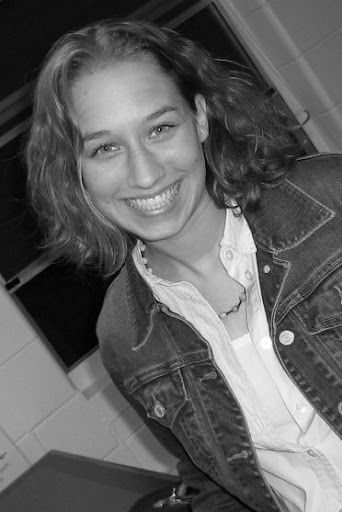
So. As I was walking home today with my Freshens smoothie in hand (which may be hypocritical to this blog entry since i'm fairly sure their cups are made out of some sort of styrofoam...smooties helping killing the earth :-( sad day)... I was thinking about the honors thesis that I want to write. The one I will sadly not be writing, since it is not specific enough nor directly in line with my class Making Things Right with Professor Schwehn. And that's all okay. I'm going to learn a lot and hopefully write a good paper without killing myself.
But I was thinking that I still want to write the paper that I have inside my head. And maybe its because I'm such a word person. That's how I make sense of things. I either talk things out or write things out...and a lot of times I think about things way too much before I do either of those things. But I feel like unless I get these thoughts down on paper I have no chance of understanding or grasping those ideas or ever doing something that will help make some little tiny part of this world right.
My thesis for my ideal honors thesis that will never be written is this:
What is the best way to go about making a difference in this world: locally or globally? How can you best make things right, or is this one of those questions that is not an either/or but a both/and. What does it take to bring about a transformation? Why are the Gandhis and Dorothy Days and Martin Luther King Jrs of this world so few and far between? Or is that just an illusion? And how do you get past the fact that despite all of the corruption, selfishness, pain, suffering, anger, and violence in this world...really we all live in a hodgebodge of hope and love and relationships...or at least the desire for all of that.
I want to look at movements like fair trade and groups like the UN that have a global focus. Non-profits like the Red Cross, Lutheran World Relief, Catholic Relief Services, Christian Peacemaker Teams, Engineers without Borders, etc. Government organizations like the Peace Corps and the State Department, Inter-Governmental Agencies like the World Bank, IMF, NATO, and the role of International Law and treaties in bringing about a more peaceful world. I want to look at how soup kitchens and food banks and local governments and community organizations bring about individual change and community transformation in local communities. And I want to look at the connection between the two...how things like education and awareness within our communities connect us with others around the world. I want to look at who groups like SALT and the Church and national governments must have a dual focus. I want to explore whether elements of this debate have always been at odds or whether forces like globalization and increasing global interdependence have made it impossible to do one without the other.
Is this too big of a thing? I don't know. This is probably a longer life type of debate that I'll continue to look at.
Last year about this time I came to the conclusion that what brings my studies and interests together can be described in one word: community. I'm interested in how communities work, how they communicate within and how they work with other communities. I'm interested in how communities are built, how they change, and how conflict tears them a part. And I'm interested in how the communities of the world interact on a global stage.
My central question since last fall has been how individuals interact in these communities and help bring about positive change.
Someday I'll write a paper about that question too. But for now, I will turn in my intensification form tomorrow and embark on honors thesis research. Stay tuned for more.
Thursday, August 31, 2006

Tuesday, August 29, 2006
International Econ: Thoughts
So, I may be a complete dork, but I am absolutely loving my International Economics course right now. I think it's one of those classes that everyone should have to take because it's so so so relevant!
Today we were looking at the current percentage changes between the US Import Price Index and the US Export Price Index and talking about some of the reasons that we're paying 7% more to import goods than we were last year, and the problems with the fact that we've only seen a 4.4% increase on the prices we get for our exports. (Basically we're paying more for what we're buying than what we're selling.)
These issues are in the news all the time - questioning whether the US has a trade advantage, whether the US is losing out in the world market, losing absolute advantage in markets we used to dominate, etc. It was so interesting to see it broken down and actually look at the numbers, and then try to answer Prof. Raman's question: so as a policymaker what would you do about this trade deficit?
We talked about long term efforts like increasing production, value or quality of goods, to increase the demand for US products. Or the more interesting one to me was by changing policy to balance out trade...taking the example of trying to cut down our demand on gas so that we were importing less. To do this, policymakers could establish a larger gas tax (which would never happen, i.e. Republicans, automotive industry/oil corporation lobbyists), or actively encourage the building of public transportation infrastructure (which won't happen anytime soon because it's soooo expensive), or put a tax on various vehicles (ha! i laughed at that one, the automotive industry would be in an uproar!)...
It was interesting 1) because I love the intersection between economics and politicts and 2) more depressingly, how soon we got to the conclusion that it couldn't happen. And not because of the political situation in Washington, but because of the lack of an American consensus or demand for alternatives to oil. The class, overall, basically saw Americans as the stereotypical tied to their SUVs/pickup trucks/gas-guzzling machines, unwilling to promote public transportation or to have any inconvience. Prof. Raman suggested that the answer may simply lie in just letting the gas prices continue to rise, with the idea that if people's pocketbooks tighten enough they'll demand something different.
And while I guess that's true, it seems awfully pessimistic. One about the nature of the American people. And two about our nation's leaders. Isn't one of the responsibilities of our nation's leaders to help guide the consensus ? To stand up and argue for what is best for our country, especially economically!?! I mean these are issues that even Republicans and Democrats can get together on, because not only are their economic and environmental issues at stake, but political issues as well. Why can't the consensus be changed before we get so broke that we can't afford gas? or before we use of the world's oil resources?
Today we were looking at the current percentage changes between the US Import Price Index and the US Export Price Index and talking about some of the reasons that we're paying 7% more to import goods than we were last year, and the problems with the fact that we've only seen a 4.4% increase on the prices we get for our exports. (Basically we're paying more for what we're buying than what we're selling.)
These issues are in the news all the time - questioning whether the US has a trade advantage, whether the US is losing out in the world market, losing absolute advantage in markets we used to dominate, etc. It was so interesting to see it broken down and actually look at the numbers, and then try to answer Prof. Raman's question: so as a policymaker what would you do about this trade deficit?
We talked about long term efforts like increasing production, value or quality of goods, to increase the demand for US products. Or the more interesting one to me was by changing policy to balance out trade...taking the example of trying to cut down our demand on gas so that we were importing less. To do this, policymakers could establish a larger gas tax (which would never happen, i.e. Republicans, automotive industry/oil corporation lobbyists), or actively encourage the building of public transportation infrastructure (which won't happen anytime soon because it's soooo expensive), or put a tax on various vehicles (ha! i laughed at that one, the automotive industry would be in an uproar!)...
It was interesting 1) because I love the intersection between economics and politicts and 2) more depressingly, how soon we got to the conclusion that it couldn't happen. And not because of the political situation in Washington, but because of the lack of an American consensus or demand for alternatives to oil. The class, overall, basically saw Americans as the stereotypical tied to their SUVs/pickup trucks/gas-guzzling machines, unwilling to promote public transportation or to have any inconvience. Prof. Raman suggested that the answer may simply lie in just letting the gas prices continue to rise, with the idea that if people's pocketbooks tighten enough they'll demand something different.
And while I guess that's true, it seems awfully pessimistic. One about the nature of the American people. And two about our nation's leaders. Isn't one of the responsibilities of our nation's leaders to help guide the consensus ? To stand up and argue for what is best for our country, especially economically!?! I mean these are issues that even Republicans and Democrats can get together on, because not only are their economic and environmental issues at stake, but political issues as well. Why can't the consensus be changed before we get so broke that we can't afford gas? or before we use of the world's oil resources?
Sunday, August 27, 2006
My International Closet
So, the night before I left for Valpo, as I was packing up all my clothes, I checked the tags of most of my wardrobe.
Why you may ask? Well, I've meaning to do it ever since I got back from Nicaragua. While I was there (with the Social Action Leadership Team from VU), we met with workers from a free trade zone where businesses like Kohls, GAP, etc have large factories to produce clothes cheaply without fair labor conditions. It presented a really interesting conundrum of how to ethically shop in a globalized world.
If you knew that the adorable shirt that hung on the GAP sale rack was made by someone who made 17 cents a day, worked in a factory with unsafe working conditions, was prevented from organizing to demand better conditions and at the end of the day still couldn't provide for their families...would you still buy it?
The answer is probably yes, because at the end of the day as Americans we still have to buy clothes and there arn't that many alternate options that let us buy what we need for the money available to us. And, when we do buy that shirt, the money does go to the employer of the worker, and the money eventually does filter down to the workers who might not otherwise have a job at all.
And yet, at the same time, isn't buying that shirt still participating in the exploitation of others?
It's a conundrum. And one very relevant today as globalization continues to spread rapidly...which is clear everytime we open our closets.
For example...my closet brings together garments from Sri Lanka, Honduras, Hong Kong, Singapore, China, Malaysia, Bangladesh, Singapore, Brunei Darussalam, USA, Australia, Taiwan, and Mexico. And that's just shirts...
Add in jeans and pants and you add a bit more of a cosmpolitan flavor: Madagascar, Moldovia, El Salvador, Jordan, Costa Rica, Kenya, India, Cambodia, Vietnam, Nicaragua, and Turkey.
Oh and those two adorable jackets that I couldn't leave the store with out? The two big players in the world economy of late, China & India.
It's just interesting you know? I have no solutions to this...and in some ways it's not a problem. And yet, at the same time there is a sense of responsibility to make sure that our livelihoods don't depend on others' pain and suffering, is there not? There is a sense that if we take on the godly responsibility to be good stewards of our resources then we have to deal with the nexus between being a good steward and being a consumer. How to deal with it is a larger question.
Of course, can I do anything about this today? No. It's a longer process. A process of adjusting oneself into just living, to quote my friend Kat Peters.
Or, as someone wise told me..."You do as much as you can each day to effect change, but recognize that as a broken and sinful people we will always struggle."
Why you may ask? Well, I've meaning to do it ever since I got back from Nicaragua. While I was there (with the Social Action Leadership Team from VU), we met with workers from a free trade zone where businesses like Kohls, GAP, etc have large factories to produce clothes cheaply without fair labor conditions. It presented a really interesting conundrum of how to ethically shop in a globalized world.
If you knew that the adorable shirt that hung on the GAP sale rack was made by someone who made 17 cents a day, worked in a factory with unsafe working conditions, was prevented from organizing to demand better conditions and at the end of the day still couldn't provide for their families...would you still buy it?
The answer is probably yes, because at the end of the day as Americans we still have to buy clothes and there arn't that many alternate options that let us buy what we need for the money available to us. And, when we do buy that shirt, the money does go to the employer of the worker, and the money eventually does filter down to the workers who might not otherwise have a job at all.
And yet, at the same time, isn't buying that shirt still participating in the exploitation of others?
It's a conundrum. And one very relevant today as globalization continues to spread rapidly...which is clear everytime we open our closets.
For example...my closet brings together garments from Sri Lanka, Honduras, Hong Kong, Singapore, China, Malaysia, Bangladesh, Singapore, Brunei Darussalam, USA, Australia, Taiwan, and Mexico. And that's just shirts...
Add in jeans and pants and you add a bit more of a cosmpolitan flavor: Madagascar, Moldovia, El Salvador, Jordan, Costa Rica, Kenya, India, Cambodia, Vietnam, Nicaragua, and Turkey.
Oh and those two adorable jackets that I couldn't leave the store with out? The two big players in the world economy of late, China & India.
It's just interesting you know? I have no solutions to this...and in some ways it's not a problem. And yet, at the same time there is a sense of responsibility to make sure that our livelihoods don't depend on others' pain and suffering, is there not? There is a sense that if we take on the godly responsibility to be good stewards of our resources then we have to deal with the nexus between being a good steward and being a consumer. How to deal with it is a larger question.
Of course, can I do anything about this today? No. It's a longer process. A process of adjusting oneself into just living, to quote my friend Kat Peters.
Or, as someone wise told me..."You do as much as you can each day to effect change, but recognize that as a broken and sinful people we will always struggle."
Nicaragua (Summary Post)
So, I feel as if this is pertinent to my blog as well. This is what I posted on the SALT blog about the Nicaragua trip I took last May. It was posted on July 13:
Hola de Nicaragua!
Well...sort of. As you can see it is July, and though our group of 11 came back with much excitement and charged with doing what we could to help those we met and change the injustices we saw...we did meet the summer head on. We all went our separate ways without the chance to put into words a brief overview of our experience. So, it now seems appropriate that in the middle of July - often the lagging point in the summer when all of us SALT shakers are separated doing a wide variety of jobs needed some rejuvenation - that we take a minute to refocus by reflecting on this trip.
Below is a summary of our trip intermixed with quotes from my traveling cohortes.
To give a bit of a background: A group of 9 Valpo students, 1 VU Pastor, and 1 Hanover student (the VU Pastor's son) headed off to Nicaragua on May 17 to stay for a week to learn about fair trade on a trip designed and coordinated by the Center for Global Education. The trip had long been the idea of Kat Peters (recent VU graduate, former SALT staffer) who studied abroad with CGE on one of their semester programs and became possible with the help of CGE and the ELCA (who gave the sponosoring grants).
We were a diverse group -not all currently involved in SALT (many new members were recruited however), not all with Spanish skills (thank God for those that did), not all with previous knowledge of Central American/Nicaraguan history, and none of us knew everyone else on the trip. This dynmaic made it all the more interesting embarking on this adventure together and certainly allowed us to experience Nica through a variety of perspectives as we talked out about the issues that confronted us.
 We arrived in Nica after a long day of travels and some pretty awful airplane food in time to stand in a really long line in customs to get our passports stamped. Our CGE leader, Vanessa was there to welcome us and we headed to our home-away-from-home, The James Mayer House.
The first day began our whirlwind adventure into understanding the issues facing Nicaragua and Central America with our first round of meetings that were probaly one of the most polarizing. Mark Lester (CGE) gave us a brief history about Nica and Central America to give context to everything we would learn later. For those of us who knew virtually nothing before that moment it was a lot to take in - Nica has been a VERY volatile place and the different political forces at play there are astounding! After lunch, (yay for Nicaraguan food!) we met with ProNicaragua, an investment promotion agency that painted a picture of Nicaragua that was very suprising for most of us. Their job is to show would-be investors why they should come to Nicaragua...and therefore some of the big injustices and controversial issues are sort of glossed over and left out of the picture.
Immediately afterwards, we visited a free trade zone (FTZ, the kind of zone that ProNicaragua promotes establising) where thousands of workers work inside factories of large multi-national corporations that have the incentives of no taxes, low wages, etc. We talked with a small number of workers who were suffering the consequences of working for one of these companies as they had tried to organize to improve conditions. When they worked to gain rights for themselves and their fellow workers they were blacklisted by the FTZs which makes it virtually impossible to find employment in Nica where unemployment is raging. (We heard estimates from 30-60% while we were there; the CIA Factbook reports 53.4% combined unemployment and underemployment.) The workers' stories were really hard to hear - being fired for attempting to organize and make conditions better in your workplace? women being fired for being pregnant? a judicial system that is so inefficent and expensive that it doesn't help its' own people? free trade agreements that blatantly favor the US? I think all of us ended the day with a lot of questions, and yet a sincere desire to understand more about this troubled country and its' people who are so strong in perserving throughout it all.
"I find my job really hard this summer, since 99.9% of the shirts sold in my store were made in central american countries. And after having met and talked with people who spend hours every day making these shirts and earning only pennies for their tedious, repetitive labor, it's hard not to inform every person who buys a shirt from me exactly how it was made. However, i asked my supervisor if i could tell people about it when i sold them shirts and she said absolutely not...I'm being forced to be silent so Americans can continue to enjoy their luxuries and remain ignorant to the injustices in the world." -Anni
 Day Two included a handful or meetings that just continued to add more perspectives and questions into the picture. We met with two people who had committed their lies to working within a network of Chirstian-based communities and had met persecution just about every step of the way. We had the chance to hear a critique of CAFTA from a representative from the National Federation of Cooperatives (Fenacoop) and then visit the Jubilee House Community which has done a lot of work in the poor area of Ciudad Sandino, outside of Managua.
 labor practices, and then all the hard work that they put into starting this cooperative. Now they are improving their business practices as they learn, and now getting the satisfaction of beginning to pay back their loans. It was so uplifting hearing them speak and getting to see the ways in which this cooperative has changed them and their families. We also had the chance to drive through Ciudad Sandino and see the medical clinic that the Jubilee House helped to build - another wonderful example of community development and empowerment!
"During our trip to Nicaragua, I learned so much about other countries and lifestyles, as well as coming to some realizations about myself and what kind of life I want to live in order to make positive differences in the lives of those who are less fortunate." - Liz
Day Three: With our brains so full, CGE wisely blocked in some good relxation time at Crater's Edge, which as you can see is blissfully beautiful. We also and went and checked out the Masaya Volcano...good times.


Day Four: Worshipping with Lutherans is fun wherever you are, even when its' completely in Spanish! ;-) Sunday morning we had the lovely opportunity to worship at a Lutheran Church in Managua and then talk to some of our peers who are working to bring awareness about HIV/AIDS to the Managua community. Talk about SALT sistas and brothers! They had just had a prayer vigil at the church the night before and it was obvious that they were doing really wonderful work in their community.
That afternoon, we headed out from Managua into the countryside; destination: Mira Flor, Sontula mountainside farming village outside the city of Esteli. I think this was one of the most profound and special times for everyone on the trip (of course they can fill free to disagree!), becuase we got to spend time in the homes of Nicaraguans and hear about this villages' experiences which was like opening a living history book (but so much better!).
 Mira Flor is a nature reserve with lots if important microclimates whihc make for some very diversified farming -coffee, bananas, vegetables, as well as cattle. There are 13 cooperatives in Mira Flor within the Union of Agricultural Cooperatives and we were the guests of the sole women's cooperative who has an ecotourism project (where women in the community host visitors in their homes and then use the profits to help provide for their families). When we first arrived (ps. it's beautiful! I think everyone took about a thousand pictures while we were there so ask for pictures!), we met with about 15 of the women in the co-op and just had the chance to listen to their stories. Some of the older women reflected on their lives - growing up and raising families on the farms, the lack of education and access to food and supplies (the nearest town is hours away by foot, still today a bus only comes all the way to Mira Flor twice a week), the excitement over the 1980 National Literacy Campaign...and then the pain and fear of the counter-revolution and the damage that it caused their community.
 That evening we all went in small groups and stayed with families. I won't even try to describe this experience, because I know it was different and special for all of us individually. But let's just say that their hospitality and openness was very touching. We also got the chance to stop by the school and play with the adorable children...
Day Five: The next morning we ventured out into the coffee fields and learned about coffee production. Whew! All you coffee drinkers, you don't know how many hands pass over those coffee beans before they become your Starbucks Grande [insert favorite drink here]. It was amazing to hear about the process and the care that goes into harvesting the crop and how hard they work to get just the right quality. We learned about the inbalances in the coffee market - coffee producers get the lowest part of the cut, where as roasters get more of the profit, except that all of the roasters are in first-world countries. So, when coffee prices took a big hit a few years ago the ones that really suffered were the farmers.
Getting depressed? Next time, you go to Starbucks ask for your drink to be made from fair trade coffee...
The farmers in Mira Flor are all working on achieving Organic certification and then Fair Trade certification - this brings in a bit more money, but requires special attention to virtually every inch of the process: planting, harvesting, drying, etc. I don't think any of us were experts by the end but we certainly learned another piece of the fair trade puzzle...and yet the visit also raised more questions. What's the best way to help coffee farmers? Buy fair trade? Or buy Starbucks (which makes direct agreements with farming coops on prices and such)? Or maybe Organic instead? Which part of the coffee market needs to be changed the most?
Day Six: Tuesday gave us the chance to ask some of those questions when we met with Bill Weaver of Lutheran World Relief who talked about some of the work the LWR is doing to help farmers and communities in Nica (click on the link for LWR's Nica page). He also helped describe the differences in certifications between Fair Trade, Organic, etc and show that all the certifications have their complexities and downsides - nothing is perfect. I don't think I could reproduce it everything he said, but for a brief overview: Fair Trade FAQ
I think at this point before I describe our last meeting, I should just say that at this point we'd encountered a lot of social justice issues in Nica - labor practices, sweatshops, economic imbalances, injust political policies (both the US & Nica), the injustices within the coffee and textile markets, relgious prejudices, and societal problems...just to name a few. The group had many discussions about how attempts to solve these problems seemed inadequate, how the complexities of the problem could/should/might be solved, what the best way for people of faith could respond, what justice really looks like, and how to be hopeful amidst an unhopeful world. Needless to say, we had a lot on our minds.
Well, if anyone could have picked us up and sent us off with a charge for change it was Father Fernando Cardinel, a Jesuit priest who has spent his life working for the power of Nicaragua and was the architect of the National Literacy Campaign. He was amazing. He talked about his sense of mission and how God led him to serve the Nicraguan people. He also shared the story of how he became a part of a political movement that got him expelled from the Jesuits, but resulted in him gathering 60,000 young people together to go out into the countrysides to teach literacy. In 5 months, the 50% rate of illiteracy went down to 12.9%. The UN awarded the effort their highest award! Let me just give some quotes...
Through his work when he was young, he "began to understand that the pain and sadness of the people [of Nicaragua] and concluded that, 1) poverty in Latin America was unbearable and unacceptable. As a human being I could not accept this suffering - it had to be changed. 2) Jesus came to reveal to us his father, the God of love and tenderness for the poor. God heard the cry of the suffering and acted...If I say that I love my brothers and sisters, but I do nto see my brothers and sisters [suffering], than I am living a lie."
"We are defeated soliders of an invincible cause, we only have one life! Do not waste it!"
"Do something important for your community, your family, your country, your world!"
"Commit yourselves to the holy, noble causes, so that one day your children can be proud of you."
"To serve is joy."
If this man can be hopeful after dedicating his entire life to the poor, than certainly we can too! It was certainly a blessing to hear him speak and to receive such encouragement as we prepared to return back home.
The next day we got up bright and early...got on a plane and left Managua for the good ole' USA.
 I'd love to say that was the whole trip (especially because if you actually read this entire blog entry you probably think we were gone a month!), but I know I've left important things out. Which is why #1-you should totally show up to SALT meetings this fall to hear more and get active yourselves! #2-you should ask all trip members (Pastor Cunningham, Ben Cunningham, Eric Matul, Anni Metz, Liz Coyne, Marcus Chafee, Liz Skrocki, Amanda Kraft, Megan Schuette, Matt Weber, and me - Hannah Cartwright) for stories, pictures and updates. Because I didn't even have space to fill you on our adventures with Nica nightlife, shopping in the marketplace, the sights of Managua, or the food! #3-If you're excited by this point, interested in learning more, or just really bored this summer...check out the links throughout this post, and below to get some ideas about how we Americans can work for justice in Nicaragua and Central America!
And post your comments and ideas...let's get some SALT shakin' action going! Thanks for reading andI'll see you in a month or so!
United Students Against Sweatshops
Sweatshop Watch
Behind the Label (start checking your clothes, where were they made? how much do you think the person who made your shirt, jeans, shoes, etc got paid? We made a habit of this on our trip.)
The Campus Living Wage Project
Equal Exchange
Fair Trade Federation
God's peace be with you and all your summer endeavors!
Hola de Nicaragua!
Well...sort of. As you can see it is July, and though our group of 11 came back with much excitement and charged with doing what we could to help those we met and change the injustices we saw...we did meet the summer head on. We all went our separate ways without the chance to put into words a brief overview of our experience. So, it now seems appropriate that in the middle of July - often the lagging point in the summer when all of us SALT shakers are separated doing a wide variety of jobs needed some rejuvenation - that we take a minute to refocus by reflecting on this trip.
Below is a summary of our trip intermixed with quotes from my traveling cohortes.
To give a bit of a background: A group of 9 Valpo students, 1 VU Pastor, and 1 Hanover student (the VU Pastor's son) headed off to Nicaragua on May 17 to stay for a week to learn about fair trade on a trip designed and coordinated by the Center for Global Education. The trip had long been the idea of Kat Peters (recent VU graduate, former SALT staffer) who studied abroad with CGE on one of their semester programs and became possible with the help of CGE and the ELCA (who gave the sponosoring grants).
We were a diverse group -not all currently involved in SALT (many new members were recruited however), not all with Spanish skills (thank God for those that did), not all with previous knowledge of Central American/Nicaraguan history, and none of us knew everyone else on the trip. This dynmaic made it all the more interesting embarking on this adventure together and certainly allowed us to experience Nica through a variety of perspectives as we talked out about the issues that confronted us.
 We arrived in Nica after a long day of travels and some pretty awful airplane food in time to stand in a really long line in customs to get our passports stamped. Our CGE leader, Vanessa was there to welcome us and we headed to our home-away-from-home, The James Mayer House.
The first day began our whirlwind adventure into understanding the issues facing Nicaragua and Central America with our first round of meetings that were probaly one of the most polarizing. Mark Lester (CGE) gave us a brief history about Nica and Central America to give context to everything we would learn later. For those of us who knew virtually nothing before that moment it was a lot to take in - Nica has been a VERY volatile place and the different political forces at play there are astounding! After lunch, (yay for Nicaraguan food!) we met with ProNicaragua, an investment promotion agency that painted a picture of Nicaragua that was very suprising for most of us. Their job is to show would-be investors why they should come to Nicaragua...and therefore some of the big injustices and controversial issues are sort of glossed over and left out of the picture.
Immediately afterwards, we visited a free trade zone (FTZ, the kind of zone that ProNicaragua promotes establising) where thousands of workers work inside factories of large multi-national corporations that have the incentives of no taxes, low wages, etc. We talked with a small number of workers who were suffering the consequences of working for one of these companies as they had tried to organize to improve conditions. When they worked to gain rights for themselves and their fellow workers they were blacklisted by the FTZs which makes it virtually impossible to find employment in Nica where unemployment is raging. (We heard estimates from 30-60% while we were there; the CIA Factbook reports 53.4% combined unemployment and underemployment.) The workers' stories were really hard to hear - being fired for attempting to organize and make conditions better in your workplace? women being fired for being pregnant? a judicial system that is so inefficent and expensive that it doesn't help its' own people? free trade agreements that blatantly favor the US? I think all of us ended the day with a lot of questions, and yet a sincere desire to understand more about this troubled country and its' people who are so strong in perserving throughout it all.
"I find my job really hard this summer, since 99.9% of the shirts sold in my store were made in central american countries. And after having met and talked with people who spend hours every day making these shirts and earning only pennies for their tedious, repetitive labor, it's hard not to inform every person who buys a shirt from me exactly how it was made. However, i asked my supervisor if i could tell people about it when i sold them shirts and she said absolutely not...I'm being forced to be silent so Americans can continue to enjoy their luxuries and remain ignorant to the injustices in the world." -Anni
 Day Two included a handful or meetings that just continued to add more perspectives and questions into the picture. We met with two people who had committed their lies to working within a network of Chirstian-based communities and had met persecution just about every step of the way. We had the chance to hear a critique of CAFTA from a representative from the National Federation of Cooperatives (Fenacoop) and then visit the Jubilee House Community which has done a lot of work in the poor area of Ciudad Sandino, outside of Managua.
One of the workers in the worker-owned
FTZ sewing together T-Shirts...and wearing it.
Talk about committed people working for justice in this crazy world!!! This community has started the Center for Development in Central America and done a lot of work to get cooperative. We got to talk to some of the original cooperative members and hear abouits' mission underway! The helped some of the women of Ciudad Sandino get a sewing cooperative started and a few years ago that blossomed into the first ever (and still only) workers' ownedt their struggle to support their families with jobs at FTZs that had bad FTZ sewing together T-Shirts...and
 wearing it.
 labor practices, and then all the hard work that they put into starting this cooperative. Now they are improving their business practices as they learn, and now getting the satisfaction of beginning to pay back their loans. It was so uplifting hearing them speak and getting to see the ways in which this cooperative has changed them and their families. We also had the chance to drive through Ciudad Sandino and see the medical clinic that the Jubilee House helped to build - another wonderful example of community development and empowerment!
"During our trip to Nicaragua, I learned so much about other countries and lifestyles, as well as coming to some realizations about myself and what kind of life I want to live in order to make positive differences in the lives of those who are less fortunate." - Liz
Day Three: With our brains so full, CGE wisely blocked in some good relxation time at Crater's Edge, which as you can see is blissfully beautiful. We also and went and checked out the Masaya Volcano...good times.


Day Four: Worshipping with Lutherans is fun wherever you are, even when its' completely in Spanish! ;-) Sunday morning we had the lovely opportunity to worship at a Lutheran Church in Managua and then talk to some of our peers who are working to bring awareness about HIV/AIDS to the Managua community. Talk about SALT sistas and brothers! They had just had a prayer vigil at the church the night before and it was obvious that they were doing really wonderful work in their community.
That afternoon, we headed out from Managua into the countryside; destination: Mira Flor, Sontula mountainside farming village outside the city of Esteli. I think this was one of the most profound and special times for everyone on the trip (of course they can fill free to disagree!), becuase we got to spend time in the homes of Nicaraguans and hear about this villages' experiences which was like opening a living history book (but so much better!).
 Mira Flor is a nature reserve with lots if important microclimates whihc make for some very diversified farming -coffee, bananas, vegetables, as well as cattle. There are 13 cooperatives in Mira Flor within the Union of Agricultural Cooperatives and we were the guests of the sole women's cooperative who has an ecotourism project (where women in the community host visitors in their homes and then use the profits to help provide for their families). When we first arrived (ps. it's beautiful! I think everyone took about a thousand pictures while we were there so ask for pictures!), we met with about 15 of the women in the co-op and just had the chance to listen to their stories. Some of the older women reflected on their lives - growing up and raising families on the farms, the lack of education and access to food and supplies (the nearest town is hours away by foot, still today a bus only comes all the way to Mira Flor twice a week), the excitement over the 1980 National Literacy Campaign...and then the pain and fear of the counter-revolution and the damage that it caused their community.
 That evening we all went in small groups and stayed with families. I won't even try to describe this experience, because I know it was different and special for all of us individually. But let's just say that their hospitality and openness was very touching. We also got the chance to stop by the school and play with the adorable children...
Day Five: The next morning we ventured out into the coffee fields and learned about coffee production. Whew! All you coffee drinkers, you don't know how many hands pass over those coffee beans before they become your Starbucks Grande [insert favorite drink here]. It was amazing to hear about the process and the care that goes into harvesting the crop and how hard they work to get just the right quality. We learned about the inbalances in the coffee market - coffee producers get the lowest part of the cut, where as roasters get more of the profit, except that all of the roasters are in first-world countries. So, when coffee prices took a big hit a few years ago the ones that really suffered were the farmers.
Getting depressed? Next time, you go to Starbucks ask for your drink to be made from fair trade coffee...
The farmers in Mira Flor are all working on achieving Organic certification and then Fair Trade certification - this brings in a bit more money, but requires special attention to virtually every inch of the process: planting, harvesting, drying, etc. I don't think any of us were experts by the end but we certainly learned another piece of the fair trade puzzle...and yet the visit also raised more questions. What's the best way to help coffee farmers? Buy fair trade? Or buy Starbucks (which makes direct agreements with farming coops on prices and such)? Or maybe Organic instead? Which part of the coffee market needs to be changed the most?
Day Six: Tuesday gave us the chance to ask some of those questions when we met with Bill Weaver of Lutheran World Relief who talked about some of the work the LWR is doing to help farmers and communities in Nica (click on the link for LWR's Nica page). He also helped describe the differences in certifications between Fair Trade, Organic, etc and show that all the certifications have their complexities and downsides - nothing is perfect. I don't think I could reproduce it everything he said, but for a brief overview: Fair Trade FAQ
I think at this point before I describe our last meeting, I should just say that at this point we'd encountered a lot of social justice issues in Nica - labor practices, sweatshops, economic imbalances, injust political policies (both the US & Nica), the injustices within the coffee and textile markets, relgious prejudices, and societal problems...just to name a few. The group had many discussions about how attempts to solve these problems seemed inadequate, how the complexities of the problem could/should/might be solved, what the best way for people of faith could respond, what justice really looks like, and how to be hopeful amidst an unhopeful world. Needless to say, we had a lot on our minds.
Well, if anyone could have picked us up and sent us off with a charge for change it was Father Fernando Cardinel, a Jesuit priest who has spent his life working for the power of Nicaragua and was the architect of the National Literacy Campaign. He was amazing. He talked about his sense of mission and how God led him to serve the Nicraguan people. He also shared the story of how he became a part of a political movement that got him expelled from the Jesuits, but resulted in him gathering 60,000 young people together to go out into the countrysides to teach literacy. In 5 months, the 50% rate of illiteracy went down to 12.9%. The UN awarded the effort their highest award! Let me just give some quotes...
Through his work when he was young, he "began to understand that the pain and sadness of the people [of Nicaragua] and concluded that, 1) poverty in Latin America was unbearable and unacceptable. As a human being I could not accept this suffering - it had to be changed. 2) Jesus came to reveal to us his father, the God of love and tenderness for the poor. God heard the cry of the suffering and acted...If I say that I love my brothers and sisters, but I do nto see my brothers and sisters [suffering], than I am living a lie."
"We are defeated soliders of an invincible cause, we only have one life! Do not waste it!"
"Do something important for your community, your family, your country, your world!"
"Commit yourselves to the holy, noble causes, so that one day your children can be proud of you."
"To serve is joy."
If this man can be hopeful after dedicating his entire life to the poor, than certainly we can too! It was certainly a blessing to hear him speak and to receive such encouragement as we prepared to return back home.
The next day we got up bright and early...got on a plane and left Managua for the good ole' USA.
 I'd love to say that was the whole trip (especially because if you actually read this entire blog entry you probably think we were gone a month!), but I know I've left important things out. Which is why #1-you should totally show up to SALT meetings this fall to hear more and get active yourselves! #2-you should ask all trip members (Pastor Cunningham, Ben Cunningham, Eric Matul, Anni Metz, Liz Coyne, Marcus Chafee, Liz Skrocki, Amanda Kraft, Megan Schuette, Matt Weber, and me - Hannah Cartwright) for stories, pictures and updates. Because I didn't even have space to fill you on our adventures with Nica nightlife, shopping in the marketplace, the sights of Managua, or the food! #3-If you're excited by this point, interested in learning more, or just really bored this summer...check out the links throughout this post, and below to get some ideas about how we Americans can work for justice in Nicaragua and Central America!
And post your comments and ideas...let's get some SALT shakin' action going! Thanks for reading andI'll see you in a month or so!
United Students Against Sweatshops
Sweatshop Watch
Behind the Label (start checking your clothes, where were they made? how much do you think the person who made your shirt, jeans, shoes, etc got paid? We made a habit of this on our trip.)
The Campus Living Wage Project
Equal Exchange
Fair Trade Federation
God's peace be with you and all your summer endeavors!
Monday, August 21, 2006
Hopeful Warmth
So...this weekend was the big move-in. Thursday, I attempted to finish things (which I did not achieve) and packed late into the night. Friday, my mom and I drove up to Valpo and moved me in, and Saturday was helping move-in the new freshman (which I am still sore from). Sunday was church and departure for the Fellowship House Retreat and then today we returned to get everything done before classes start tomorrow.
It has been very busy.
And yet, much better than expected. I've really enjoyed seeing my friends and those people in the VU community. And it hasn't felt quite as wierd as it could have after being gone a semester. Part of it just may be the joy of renewing friendships and relationships that continued on even after I wasn't present on campus. I've also gotten to have my stuff in a "home" again, which I haven't really felt since I left DC so that's nice. Of course, having some time off from thinking about my foreign policy project has also been good...hopefully it will help my writing too when I sit down to renew the project.
But what I really wanted to talk about here, was the suprising joy I found in the retreat this weekend. The initial pessimism I felt faded away as I heard the strength of new voices and ideas, and realized that some of what the Fellowship House community has been working towards has reached a new level of beginning. Which is so needed. And which last fall, I worked so hard to make happen...and had thought that I had failed. I'm still unsure about many things from last fall, some struggles continue. But seeing some of my work form the platform of some of our discussions, that was really...touching? rewarding? humbling?
It gave me hope that maybe my leadership isn't so flawed that it doesn't give off some good sometimes. Maybe I'll be able to look back at this summer some day and feel as if I achieved something...which I still don't quite feel like. It also gives me some warmth and encouragment at a time when I have been feeling so off kilter...and yet also humbled because, though sometimes I'm acutely aware of my gifts and how I think God calls me to use them...or at least what my instincts are leading me towards, it is rare these days for me to feel entirely comfertable in using them. Yet at some point, I have to admit that (at least in others lives) God gives the gifts that he wants us to use when its hard. And sometimes he shows us the fruits of our gifts and sometimes he doesn't. He almost assuredly calls us to struggle with our gifts. It is humbling to realize that the struggle is a part of a larger plan. It is humbling to know that no matter how much I screw up, God can still use me. It is terrifying to think though that it is only if I persevere through the struggle though that I can really do the work God wants me to do. Whatever that is.
It was certainly a warmth. Just like the hugs of so many these past few days. Just like being able to actually sit and talk, or talk a walk, or reflect within this community that pays attention to reflections. It's the warmth of Valpo. The warmth of God. How I've missed it.
I hope I can make this semester about giving myself the time and space to continue to revel in it.
At some point in the retreat, Cat was leading us in looking at scripture as a guide for how the Fellowship House community is going to live and she pulled up Galations 1:10:
"Am I now seeking human approval, or God's approval? Or am I trying to please people? If I were still pleasing people, I would not be a servant of Christ."
Somehow this struck me in regards to this summer. And I'm still so far removed from being able to reflect upon this summer, that I don't know exactly where it goes. I don't know if I was trying to please people, or fix the group too much, or simply please myself. I don't know if God guided me or if somehow I got off on the wrong road. I don't know if it was simply just hard and that I had to learn things about myself, about my gifts, about how to work with others and that I just have to trust that God worked through me in ways that I can't see and will never see. I'm just not sure.
But I do hope that I can discern how to find that line and yet not feel the constant pressure of living the line this semester. I hope I can find what it means to seek God's approval as a servant of Christ. I think the first step to that is going to be figuring out myself again. Giving myself some time. Certainly God and I need some time, we've been in a bit of tiff for awhile. I guess we'll see. It starts tomorrow and it's already late....here goes.
It has been very busy.
And yet, much better than expected. I've really enjoyed seeing my friends and those people in the VU community. And it hasn't felt quite as wierd as it could have after being gone a semester. Part of it just may be the joy of renewing friendships and relationships that continued on even after I wasn't present on campus. I've also gotten to have my stuff in a "home" again, which I haven't really felt since I left DC so that's nice. Of course, having some time off from thinking about my foreign policy project has also been good...hopefully it will help my writing too when I sit down to renew the project.
But what I really wanted to talk about here, was the suprising joy I found in the retreat this weekend. The initial pessimism I felt faded away as I heard the strength of new voices and ideas, and realized that some of what the Fellowship House community has been working towards has reached a new level of beginning. Which is so needed. And which last fall, I worked so hard to make happen...and had thought that I had failed. I'm still unsure about many things from last fall, some struggles continue. But seeing some of my work form the platform of some of our discussions, that was really...touching? rewarding? humbling?
It gave me hope that maybe my leadership isn't so flawed that it doesn't give off some good sometimes. Maybe I'll be able to look back at this summer some day and feel as if I achieved something...which I still don't quite feel like. It also gives me some warmth and encouragment at a time when I have been feeling so off kilter...and yet also humbled because, though sometimes I'm acutely aware of my gifts and how I think God calls me to use them...or at least what my instincts are leading me towards, it is rare these days for me to feel entirely comfertable in using them. Yet at some point, I have to admit that (at least in others lives) God gives the gifts that he wants us to use when its hard. And sometimes he shows us the fruits of our gifts and sometimes he doesn't. He almost assuredly calls us to struggle with our gifts. It is humbling to realize that the struggle is a part of a larger plan. It is humbling to know that no matter how much I screw up, God can still use me. It is terrifying to think though that it is only if I persevere through the struggle though that I can really do the work God wants me to do. Whatever that is.
It was certainly a warmth. Just like the hugs of so many these past few days. Just like being able to actually sit and talk, or talk a walk, or reflect within this community that pays attention to reflections. It's the warmth of Valpo. The warmth of God. How I've missed it.
I hope I can make this semester about giving myself the time and space to continue to revel in it.
At some point in the retreat, Cat was leading us in looking at scripture as a guide for how the Fellowship House community is going to live and she pulled up Galations 1:10:
"Am I now seeking human approval, or God's approval? Or am I trying to please people? If I were still pleasing people, I would not be a servant of Christ."
Somehow this struck me in regards to this summer. And I'm still so far removed from being able to reflect upon this summer, that I don't know exactly where it goes. I don't know if I was trying to please people, or fix the group too much, or simply please myself. I don't know if God guided me or if somehow I got off on the wrong road. I don't know if it was simply just hard and that I had to learn things about myself, about my gifts, about how to work with others and that I just have to trust that God worked through me in ways that I can't see and will never see. I'm just not sure.
But I do hope that I can discern how to find that line and yet not feel the constant pressure of living the line this semester. I hope I can find what it means to seek God's approval as a servant of Christ. I think the first step to that is going to be figuring out myself again. Giving myself some time. Certainly God and I need some time, we've been in a bit of tiff for awhile. I guess we'll see. It starts tomorrow and it's already late....here goes.
Tuesday, August 15, 2006
A State within a State
So, during the last few days I've finally caught myself up with what's been going on in the Lebannon-Israel war these past month. (I had sort of being ignoring it as much as possible, after the initial onset and digesting the reaction of my students, and then honestly well it's been very depressing...)
I find it very interesting to hear all the commentary on Hizbollah, as a "state within a state." The New York Times reported that within days after the cease-fire during the intial Israeli pull-out, hundreds of Hizbollah members spread around the country to assess the damage, help people get moved back in and begin the process of rebuilding. This is extraordinarily smart in my opinion, as Hizbollah could easily get blamed (and some say it still may happen) for starting this war just as Lebannon was beginning to rebuild after the last one. But it's also interesting, becuase Hizbollah is again proving that it is more efficient and better organized than the Lebanese state itself.
"Hezbollah’s reputation as an efficient grass-roots social service network — as opposed to the Lebanese government, regarded by many here as sleek men in suits doing well — was in evidence everywhere. Young men with walkie-talkies and clipboards were in the battered Shiite neighborhoods on the southern edge of Bint Jbail, taking notes on the extent of the damage." - NY Times.
Thus, it is described as a state-within-a-state. Or even a state within a non-state as one Lebanese professer put it. This seems odd to us in the west I think, where our government for all its' faults is efficient and dependable, the majority of the time. Our every day lives revolve around systems of efficiency and convienience, many of which are made possible by the structure and legislation of our state and federal governments. Even during disasters like Hurricane Katrina, while criticism may be warranted the response was still overwhelming compared to what the Lebanese government must be able to offer. A New York times article today reported that though the Lebanese Army was being deployed, their intial level of activity seems to be slightly disappointing.
It seems like at times we just don't know what to make of groups like Hizbollah, or Hamas. They are militant and carry out terrorist actions. But they also start wars? What happened to wars being between two states? What do we do when the war is between an independent group that has nationalistic ties and a nation-state? US foreign-policy makers are obviously still struggling with this question because it is truly complicated. Especially, when the group is Hizbollah, which offers services their state governments can't offer, is more visible to the state's people...oh and gets an "unlimited reconstruction budget" from friendly state Iran.
What do you with a state-within-a-state like that?
I find it very interesting to hear all the commentary on Hizbollah, as a "state within a state." The New York Times reported that within days after the cease-fire during the intial Israeli pull-out, hundreds of Hizbollah members spread around the country to assess the damage, help people get moved back in and begin the process of rebuilding. This is extraordinarily smart in my opinion, as Hizbollah could easily get blamed (and some say it still may happen) for starting this war just as Lebannon was beginning to rebuild after the last one. But it's also interesting, becuase Hizbollah is again proving that it is more efficient and better organized than the Lebanese state itself.
"Hezbollah’s reputation as an efficient grass-roots social service network — as opposed to the Lebanese government, regarded by many here as sleek men in suits doing well — was in evidence everywhere. Young men with walkie-talkies and clipboards were in the battered Shiite neighborhoods on the southern edge of Bint Jbail, taking notes on the extent of the damage." - NY Times.
Thus, it is described as a state-within-a-state. Or even a state within a non-state as one Lebanese professer put it. This seems odd to us in the west I think, where our government for all its' faults is efficient and dependable, the majority of the time. Our every day lives revolve around systems of efficiency and convienience, many of which are made possible by the structure and legislation of our state and federal governments. Even during disasters like Hurricane Katrina, while criticism may be warranted the response was still overwhelming compared to what the Lebanese government must be able to offer. A New York times article today reported that though the Lebanese Army was being deployed, their intial level of activity seems to be slightly disappointing.
It seems like at times we just don't know what to make of groups like Hizbollah, or Hamas. They are militant and carry out terrorist actions. But they also start wars? What happened to wars being between two states? What do we do when the war is between an independent group that has nationalistic ties and a nation-state? US foreign-policy makers are obviously still struggling with this question because it is truly complicated. Especially, when the group is Hizbollah, which offers services their state governments can't offer, is more visible to the state's people...oh and gets an "unlimited reconstruction budget" from friendly state Iran.
What do you with a state-within-a-state like that?
Thursday, August 10, 2006
The Power of Words
So, I realized something important about myself this evening as I was endeavoring to make more headway on the previously mentioned paper...I get caught up in the power of words.
Words pick me up, grab hold of me, cause excitement or awe to rise up inside of me, capture my attention, and make my thoughts fly into a thousand directions.
I think that's one of the reasons why I love reading...and yet, sometimes procrastinate on diving into a book because it always brings something new into my head, exhausting me, exhilariting me, throwing me for new loops.
On a research note, I quickly get caught up in the ideas that powerful writing presents or the power of what I'm reading about. These days as I'm reading pages on Constitutional history, the powers of the Supreme Court, Congress and the President, I get caught up in the powerful history that is captured on the page. I get overwhelmed by how much I don't know, and how much better some other author's words are for conveying an idea that I just learned about. I latch onto word order or the way in which someone describes something and it takes me awhile to step back and go "oh."
Most of the time that comes when I'm finally forced to write it out myself. That's why deadlines are so very, very important in my life.
So...what is occupying my mind so late this evening? Thoughts on American law, of course!
(This may be a bad sign in that I might have to consider law school at some point...ergh.)
"The Constitution of the United Statesis beguilingly - and misleadingly - short, tempting some poele to suppose that, unlike sacred texts, it can be read and understood by anyone...The Constitution is [instead] elusive, ambiguous, murky, sometimes quite opaque."
In deciding what the Constitution means, we must first grapple with the question, Whose meaning are we seeking?" --The Evolving Constitution, Jethro K. Lieberman
Thus surmising the constitutional conflict that is the basis for so much of American politics. Who has the power? And why do they? And should they? What happens if they go to far? Can they be stopped? Should they be stopped? And what happens if the person in the wrong believes something different?
There's something beautiful about laws that grapple with those questions. There's something frustrating about trying to put into succinct paragraphs how things like Constitutional separations of power are so imperative to understanding how US foreign policy works, when I don't really understand all of the implications...While still realizing that this is not the point of my paper anyway! Grrrargh.
These are the days when I think I would be a lot better off just finding a job after graduation and keeping my big scale ideas to relaxed evening reading for the rest of my life, therefore never having to grapple with them enough to put my own ideas on paper.
Can I just repeat the sound, GRRRARGH!?!
Words pick me up, grab hold of me, cause excitement or awe to rise up inside of me, capture my attention, and make my thoughts fly into a thousand directions.
I think that's one of the reasons why I love reading...and yet, sometimes procrastinate on diving into a book because it always brings something new into my head, exhausting me, exhilariting me, throwing me for new loops.
On a research note, I quickly get caught up in the ideas that powerful writing presents or the power of what I'm reading about. These days as I'm reading pages on Constitutional history, the powers of the Supreme Court, Congress and the President, I get caught up in the powerful history that is captured on the page. I get overwhelmed by how much I don't know, and how much better some other author's words are for conveying an idea that I just learned about. I latch onto word order or the way in which someone describes something and it takes me awhile to step back and go "oh."
Most of the time that comes when I'm finally forced to write it out myself. That's why deadlines are so very, very important in my life.
So...what is occupying my mind so late this evening? Thoughts on American law, of course!
(This may be a bad sign in that I might have to consider law school at some point...ergh.)
"The Constitution of the United Statesis beguilingly - and misleadingly - short, tempting some poele to suppose that, unlike sacred texts, it can be read and understood by anyone...The Constitution is [instead] elusive, ambiguous, murky, sometimes quite opaque."
In deciding what the Constitution means, we must first grapple with the question, Whose meaning are we seeking?" --The Evolving Constitution, Jethro K. Lieberman
Thus surmising the constitutional conflict that is the basis for so much of American politics. Who has the power? And why do they? And should they? What happens if they go to far? Can they be stopped? Should they be stopped? And what happens if the person in the wrong believes something different?
There's something beautiful about laws that grapple with those questions. There's something frustrating about trying to put into succinct paragraphs how things like Constitutional separations of power are so imperative to understanding how US foreign policy works, when I don't really understand all of the implications...While still realizing that this is not the point of my paper anyway! Grrrargh.
These are the days when I think I would be a lot better off just finding a job after graduation and keeping my big scale ideas to relaxed evening reading for the rest of my life, therefore never having to grapple with them enough to put my own ideas on paper.
Can I just repeat the sound, GRRRARGH!?!
Wednesday, August 09, 2006
Foreign Policy Players (Paper #1)
So. I've hit writer's block. Yet again. And now, in an attempt to make this day worth something, I'll see if maybe I can trick my fingers into typing something worthwhile by writing the basic idea of my paper in this forum. Try not to get too bored. {PS: All informal language will be removed from the final paper. It is there purely for your enjoyment and my sanity at this point.}
Players in US Foreign Policy
On Februrary 20, 1978 Gerald Ford delivered a speech at Kansas State University, in which he posed the question: "How should [the] powers of the executive and legislative branches be coordinated, especially in the field of foreign policy?" Freshly retired from the American Presidency, he then spun out his own answer to the question of how the "complex interplay" between Congress and the President can be most effective while also responding to the issues raised by the War Powers Resolution of 1973 and the Vietnam War. His argument reflects one side of the larger debate of who should hold the power in formulating foreign policy that has been existant from the moment that the Constitution received its' last signature. The founders spun out these arguments in the meetings of the Federal Convention, and later defended their decisions in The Federalist Papers. The debates can be found woven throughout American history, and are no less relevant today in the context of the Bush Administration, a partisan Congress, and a foreign policy bureacracy unlike any that this nation has seen before. This paper seeks to survey the players within this bureacracy and explore the question of how US foreign policy can be effectively coordinated in today's political environment.
This survey begins where US foreign policy began, with the Constitution and the Founders' outline for how foreign affairs should be dealt with on behalf of the US government. On the surface, the Constitution seems to set forth a balanced agenda for the three branches: the President is granted the power to command the army and the navy, make treaties, appoint ambassadors and other state officials, and receive foreign dignitaries; the Congress gets to declare war, regulate foreign commerce, define and punish piracies (obviously the most fun part of the job...pirates!), and make the rules for the Government and the land and sea forces; oh and the Supreme Court, it basically as the power to interpret all said laws or actions as constitutional or unconstitutional therefore keeping the other two branches in check and not allowing them to kill the other.
However, history shows that as balanced and nice as that may seem in pretty ink on ancient parchment, and as optimistic as the founders were about the quality and knowledge of the future US Senators and Presidents (see The Federalist Papers #64)...the balance didn't last too long. And once we hit World War II, the checks and balances seem to get permanently out of whack because then you have 3 things happen: #1-the government reorganizes itself drastically changing how things get done #2-the US gets handed global power (end of World War II), and simultaneoulsy is threatened to no longer be in power (silly Soviets) and #3-the foreign policy trends which had existed before sort of changed over onto a new course, changing how people looked at the US, power, and the government in general.
So, a few things important began to go on (and here's the part that I don't know how to talk about, or maybe just don't know enough about):
---National Security Act of 1947 - basically reorganizes the Executive branch's ability to formulate foreign policy by establishing the National Security Council (NSC), Central Intelligence Agency (CIA, formally the wartime OSS), and the Department of Defense.
---War Powers Act 1973 - Congress getting fet up with Presidents taking Executive power and running with it, especially when it involves putting Americans into harms way. Their opponents say that they've always had that power and that it was actually Congress at this point who was doing the constitutionally unthinkable and demanding more power than they were granted. Semantics. Whatever.
---Congress changing...a lot. You had shifts of Congressmen totally and utterly change, huge increases in congressional staff and individual congressional power. The up-and-down curve of respect and power of the Senate Foreign Relations Committee and the House International Relations Committee. And various loud voices enamating from the Congressional Chambers that affected the relationship between the Executive and Legislative branches.
---Preisdents: FDR (at the end of WWII, 1933-1945), Truman ( 1945-1953), Eisenhower (1953-1961), Kennedy (1961-1963), Johnson (1963-1969), Nixon (1969-1974), Ford (1974-1977), Carter (1977-1981), Reagan (1981-1989), George Bush (1989-1993), Bill Clinton (1993-2001), George W. Bush (2001-Present).
[Trying to figure out how each one of them affected these patterns in a succinct manner makes me want to cry.]
---Basically...the long and the short of it, the question of power between Congress and the President had its ups and downs over the latter half of the 20th Century, which at its' height resulted in Congressional act or reproval in the War Powers Resolution of 1973, which was subsequently ignored by presidential administrations.
---Now, we are in another significant turning point in foreign policy with a President who is taking a gracious view of Constitutional Executive power and who has put out significant policy changes in terms of the National Security Acts of 2002 and 2004, and the debate continues on.
But of course, it's not just the president who is making these decisions. Many people affect the decisions that he signs of on...in other words:
Players in US Foreign Policy
On Februrary 20, 1978 Gerald Ford delivered a speech at Kansas State University, in which he posed the question: "How should [the] powers of the executive and legislative branches be coordinated, especially in the field of foreign policy?" Freshly retired from the American Presidency, he then spun out his own answer to the question of how the "complex interplay" between Congress and the President can be most effective while also responding to the issues raised by the War Powers Resolution of 1973 and the Vietnam War. His argument reflects one side of the larger debate of who should hold the power in formulating foreign policy that has been existant from the moment that the Constitution received its' last signature. The founders spun out these arguments in the meetings of the Federal Convention, and later defended their decisions in The Federalist Papers. The debates can be found woven throughout American history, and are no less relevant today in the context of the Bush Administration, a partisan Congress, and a foreign policy bureacracy unlike any that this nation has seen before. This paper seeks to survey the players within this bureacracy and explore the question of how US foreign policy can be effectively coordinated in today's political environment.
This survey begins where US foreign policy began, with the Constitution and the Founders' outline for how foreign affairs should be dealt with on behalf of the US government. On the surface, the Constitution seems to set forth a balanced agenda for the three branches: the President is granted the power to command the army and the navy, make treaties, appoint ambassadors and other state officials, and receive foreign dignitaries; the Congress gets to declare war, regulate foreign commerce, define and punish piracies (obviously the most fun part of the job...pirates!), and make the rules for the Government and the land and sea forces; oh and the Supreme Court, it basically as the power to interpret all said laws or actions as constitutional or unconstitutional therefore keeping the other two branches in check and not allowing them to kill the other.
However, history shows that as balanced and nice as that may seem in pretty ink on ancient parchment, and as optimistic as the founders were about the quality and knowledge of the future US Senators and Presidents (see The Federalist Papers #64)...the balance didn't last too long. And once we hit World War II, the checks and balances seem to get permanently out of whack because then you have 3 things happen: #1-the government reorganizes itself drastically changing how things get done #2-the US gets handed global power (end of World War II), and simultaneoulsy is threatened to no longer be in power (silly Soviets) and #3-the foreign policy trends which had existed before sort of changed over onto a new course, changing how people looked at the US, power, and the government in general.
So, a few things important began to go on (and here's the part that I don't know how to talk about, or maybe just don't know enough about):
---National Security Act of 1947 - basically reorganizes the Executive branch's ability to formulate foreign policy by establishing the National Security Council (NSC), Central Intelligence Agency (CIA, formally the wartime OSS), and the Department of Defense.
---War Powers Act 1973 - Congress getting fet up with Presidents taking Executive power and running with it, especially when it involves putting Americans into harms way. Their opponents say that they've always had that power and that it was actually Congress at this point who was doing the constitutionally unthinkable and demanding more power than they were granted. Semantics. Whatever.
---Congress changing...a lot. You had shifts of Congressmen totally and utterly change, huge increases in congressional staff and individual congressional power. The up-and-down curve of respect and power of the Senate Foreign Relations Committee and the House International Relations Committee. And various loud voices enamating from the Congressional Chambers that affected the relationship between the Executive and Legislative branches.
---Preisdents: FDR (at the end of WWII, 1933-1945), Truman ( 1945-1953), Eisenhower (1953-1961), Kennedy (1961-1963), Johnson (1963-1969), Nixon (1969-1974), Ford (1974-1977), Carter (1977-1981), Reagan (1981-1989), George Bush (1989-1993), Bill Clinton (1993-2001), George W. Bush (2001-Present).
[Trying to figure out how each one of them affected these patterns in a succinct manner makes me want to cry.]
---Basically...the long and the short of it, the question of power between Congress and the President had its ups and downs over the latter half of the 20th Century, which at its' height resulted in Congressional act or reproval in the War Powers Resolution of 1973, which was subsequently ignored by presidential administrations.
---Now, we are in another significant turning point in foreign policy with a President who is taking a gracious view of Constitutional Executive power and who has put out significant policy changes in terms of the National Security Acts of 2002 and 2004, and the debate continues on.
But of course, it's not just the president who is making these decisions. Many people affect the decisions that he signs of on...in other words:
“The president does not sit atop the bureaucracy as if it were a pyramid of power, commanding bureaucratic units to do his bidding. Rather, the president is confronted with well-established institutions and ongoing stream of foreign policy. Much of the context and direction of policy is provided by members of the foreign policy bureaucracy who have careers and perspectives that inevitably reflect more than the most recent presidential electoral returns."
Thus, within the Executive Branch you have the CIA and the NSC which provide critical intelligence that inform foreign policy decisions for the President, as well as Congress. The Department of State...Department of Defense...Various other Government agencies...Treasury, Commerce, Agriculture, Energy, EPA, etc. USAID!
NGOs...Corporations, Lobbyists...International Bodies...The People
This is a mess.
Tuesday, August 08, 2006
A Vision
"It has been frequently remarked that it seems to have been reserved to the people of this country, by their conduct and example, to decide the important question, whether societies of men are really capable or not of establishing good government from reflection and choice, or whether they are forever destined to depend for their political constitutions on accident and force." - Alexandar Hamilton, the Federalist Papers
So, I've been reading selections from the Federalist Papers today as a part of some of my summer research and I was struck by the clear vision that these men had for the nation they were creating. The debated and argued and pounded out document after document and the result was the American form of government. And somehow their crazy ideas still survive on today, although my guess is some of them are probably turning over in their graves at result of 200 years of evolution...oh well.
What does it take for a vision like that to survive? What kind of person does it take to bring forth a vision for the world that so drastically changes it? Several visionaries come to mind...Martin Luther King Jr., Gandhi of course. Several presidents. Saintly types like Mother Theresa, Dorothy Day or Brother Roger of the Taize community. That Jesus guy. The prophets. Church patrons...Wesley, Luther, Calvin...Then you know, there's Walt Disney. Sam Walton. And Bill Gates. George W., Oprah, Bono.
There's something about people who have a strong and compelling vision that makes people sit up and listen, even if they disagree. My guess is today sometimes we confuse the "loudness" of a voice with a vision for the future, or even the present. But still, it is a vision that makes us take notice. It is a vision that we shape our lives around.
Americans still celebrate the Founders' vision with each wave of the stars and stripes and the rhetoric of liberty and democracy. And despite the corruption that seems to cloud DC, there are people who take that vision to their hearts and souls and go after it. We might disagree about what that vision says, and yet...we seem to do alright.
These days, the vision for today and tomorrow's American foreign policy is headlinging the news (and of course more my focus that domestic politics). The need for a strong, compelling (okay...and I would argue different) vision for US foriegn policy is urgent in this globalized world. Every once in a while we get a hint of it - depending on which side you come from, maybe it's already there.
In the poltical world, the buzz is all about who will give the stronger vision for Congress in the fall elections? Who will provide the more persuasive vision for bring faith and politics together? Or at least the more persuasive rhetoric...Who is going to bring a vision for a new economic order that does away with poverty as we know it? Where is the vision for a world absent of nuclear weapons and military prowess? Where is the vision for an America that doesn't revolve around shopping and snagging the latest Britney Spears gossip? Or are those visions already there...and we just miss them?
Are we lacking the visionaries or the will to make their visions reality?
So, I've been reading selections from the Federalist Papers today as a part of some of my summer research and I was struck by the clear vision that these men had for the nation they were creating. The debated and argued and pounded out document after document and the result was the American form of government. And somehow their crazy ideas still survive on today, although my guess is some of them are probably turning over in their graves at result of 200 years of evolution...oh well.
What does it take for a vision like that to survive? What kind of person does it take to bring forth a vision for the world that so drastically changes it? Several visionaries come to mind...Martin Luther King Jr., Gandhi of course. Several presidents. Saintly types like Mother Theresa, Dorothy Day or Brother Roger of the Taize community. That Jesus guy. The prophets. Church patrons...Wesley, Luther, Calvin...Then you know, there's Walt Disney. Sam Walton. And Bill Gates. George W., Oprah, Bono.
There's something about people who have a strong and compelling vision that makes people sit up and listen, even if they disagree. My guess is today sometimes we confuse the "loudness" of a voice with a vision for the future, or even the present. But still, it is a vision that makes us take notice. It is a vision that we shape our lives around.
Americans still celebrate the Founders' vision with each wave of the stars and stripes and the rhetoric of liberty and democracy. And despite the corruption that seems to cloud DC, there are people who take that vision to their hearts and souls and go after it. We might disagree about what that vision says, and yet...we seem to do alright.
These days, the vision for today and tomorrow's American foreign policy is headlinging the news (and of course more my focus that domestic politics). The need for a strong, compelling (okay...and I would argue different) vision for US foriegn policy is urgent in this globalized world. Every once in a while we get a hint of it - depending on which side you come from, maybe it's already there.
In the poltical world, the buzz is all about who will give the stronger vision for Congress in the fall elections? Who will provide the more persuasive vision for bring faith and politics together? Or at least the more persuasive rhetoric...Who is going to bring a vision for a new economic order that does away with poverty as we know it? Where is the vision for a world absent of nuclear weapons and military prowess? Where is the vision for an America that doesn't revolve around shopping and snagging the latest Britney Spears gossip? Or are those visions already there...and we just miss them?
Are we lacking the visionaries or the will to make their visions reality?
Subscribe to:
Posts (Atom)